
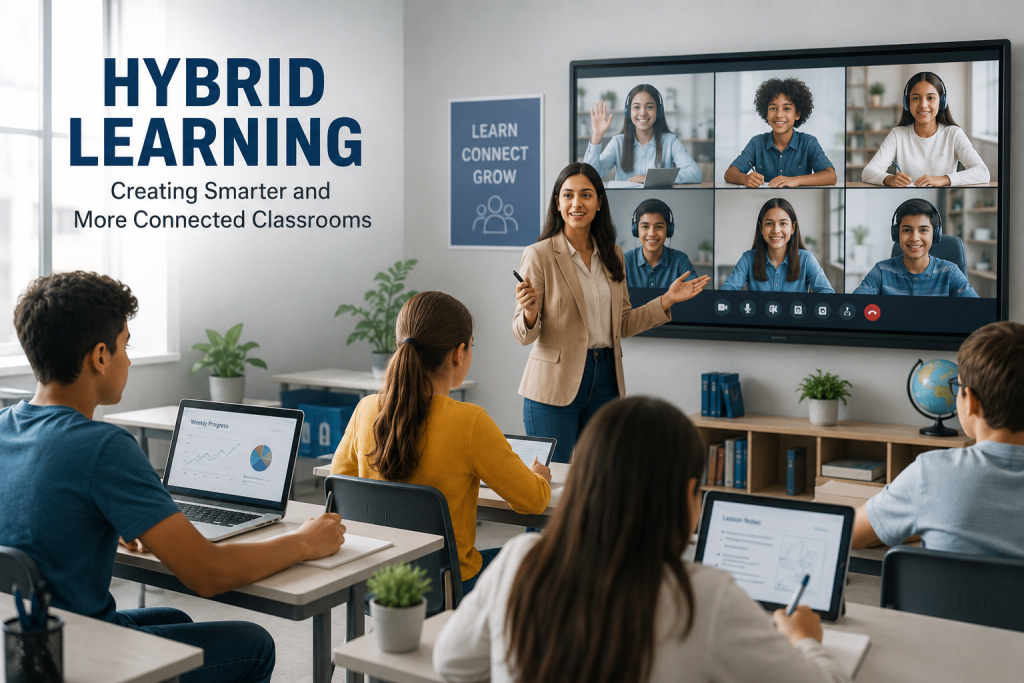
Education is changing rapidly. The traditional classroom is no longer the only place where teaching and learning take place. With the growth of digital platforms, online resources, video-based learning and connected technologies, educational institutions are finding new ways to make learning more flexible and accessible.
One of the approaches gaining importance is hybrid learning.
Hybrid learning combines face-to-face classroom teaching with online and digital learning experiences. It gives educators the flexibility to teach students who are physically present in the classroom while also connecting with learners who participate remotely.
As technology continues to become an important part of education, hybrid learning can help institutions create smarter, more connected and flexible learning environments.
What Is Hybrid Learning?
Hybrid learning is an approach that combines traditional classroom interaction with digital learning.
In a conventional classroom, students and teachers are usually present in the same physical space. In a hybrid learning environment, technology allows some students to participate remotely while others attend the class in person.
- Live online classes
- Video conferencing
- Digital learning platforms
- Recorded lectures
- Interactive displays
- Online learning resources
- Digital assessments
- Classroom recording and streaming
The purpose is not simply to replace classroom teaching with technology. Instead, technology supports educators in creating a learning experience that can extend beyond the physical classroom.
Why Is Hybrid Learning Becoming Important?
The expectations around education are changing. Students increasingly use digital platforms to access information, communicate and learn. At the same time, educational institutions are looking for ways to make their teaching environments more flexible.
Hybrid learning provides an opportunity to connect different learning methods.
For example, a teacher can conduct a lesson in a physical classroom while students who are unable to attend in person can join the same session remotely. The session can also be recorded and made available for later learning or revision.
This flexibility can be particularly useful for universities, schools, training institutions, professional education providers and organizations that conduct learning programs across different locations.
The Role of Technology in Modern Classrooms
echnology has become more than an additional tool in education. It is increasingly becoming part of the learning environment itself.
A modern classroom may include cameras, microphones, displays, computers, networking equipment, lighting and other digital technologies that work together to support teaching.
When these technologies are properly planned and integrated, educators can create a smoother experience for both classroom and remote learners.
For example, a professional camera setup can help remote students clearly see the instructor and classroom activities. Good audio equipment can make the teacher’s voice easier to understand. Interactive displays can help educators present digital content more effectively.
The goal is simple: technology should make teaching and learning easier, clearer and more connected.
Creating a More Connected Learning Experience
A successful hybrid classroom is not only about installing equipment. The entire learning environment needs to work together.
The room layout, audio, video, displays, internet connectivity and teaching workflow all have an important role to play.
Educators also need to feel comfortable using the technology. A complicated system can become a barrier if teachers do not know how to operate it effectively.
This is why educational institutions need to think about both technology and people when developing a hybrid learning environment.
A well-planned setup can help teachers focus on their lessons instead of spending valuable time dealing with technical difficulties.
The Role of EduTech Studios in Hybrid Learning
EduTech studios are becoming an important part of modern educational infrastructure.
Unlike a basic classroom, a professional Hybrid EduTech Studio can be designed specifically for activities such as online teaching, lecture recording, live classes, content creation and hybrid learning.
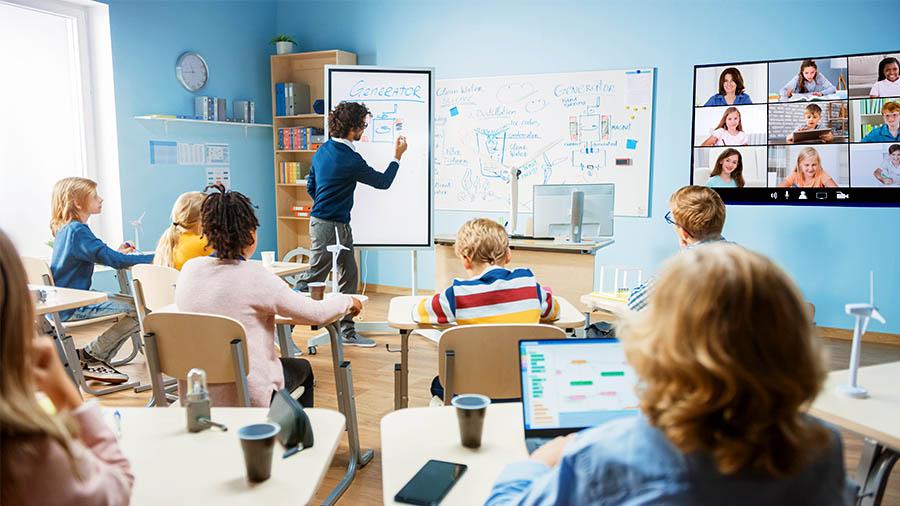
A complete studio environment may bring together:
- Professional audio and video equipment
- Cameras and microphones
- Displays and presentation systems
- Suitable lighting
- Recording and streaming solutions
- Online class infrastructure
- Instructor-friendly controls
- Reliable connectivity
When these elements are integrated into a single environment, institutions can create a more professional and consistent digital learning experience.
An EduTech studio can also support educators who want to create recorded educational content that students can access beyond the classroom.
Benefits of Hybrid Learning for Educational Institutions
One of the biggest advantages of hybrid learning is flexibility.
Students may be able to participate in learning from different locations, while institutions can reach a wider audience without relying entirely on physical classroom capacity.
Hybrid learning can also support:
- Greater accessibility: Students who cannot always attend physically can have another way to participate.
- Flexible learning: Recorded sessions and digital resources can give learners opportunities to revisit lessons.
- Better use of educational resources: Institutions can combine physical classrooms with digital platforms and content.
- Expanded reach: Teachers and institutions can connect with learners beyond a single physical location.
- Improved digital skills: Regular interaction with digital learning technologies can help educators and students become more comfortable with modern tools.
However, these benefits depend on how effectively the technology and learning process are implemented.
The Importance of Training Educators
Technology alone cannot transform education.
Teachers and educators are at the heart of every learning environment. Even the most advanced studio or classroom setup is useful only when educators know how to use it effectively.
Training can help teachers understand how to operate classroom technology, conduct online sessions, manage digital content and communicate effectively with remote learners.
This makes teacher training an important part of the transition towards hybrid learning.
Institutions should therefore consider training and ongoing support alongside their investment in educational technology.
What Should Institutions Consider?
Before implementing a hybrid learning environment, institutions should understand their specific requirements.
There is no single setup that works for every organization.
A school may have different requirements from a university. A training institute may need a different environment from an organization producing large amounts of educational video content.
Some important factors to consider include:
- The size and layout of the room
- Number of learners
- Teaching requirements
- Audio and video requirements
- Online class requirements
- Recording and streaming needs
- Internet and network infrastructure
- Ease of operation
- Future expansion
- Training and technical support
Planning these requirements in advance can help institutions build a system that is practical and suitable for their long-term goals.
Looking Towards the Future of Education
The future of education is likely to involve a combination of physical and digital learning experiences.
Artificial intelligence, digital learning platforms, interactive technologies, immersive learning and other emerging technologies are continuing to influence how educational content is created and delivered.
But technology should always serve the purpose of education.
The most successful learning environments will not necessarily be the ones with the most technology. They will be the environments where technology is thoughtfully integrated with effective teaching.
Hybrid learning is part of this wider transformation. It gives institutions an opportunity to connect physical classrooms with digital learning and create more flexible educational experiences.
Conclusion
Hybrid learning represents an important step in the evolution of modern education. By bringing together face-to-face teaching and digital learning, educational institutions can create learning environments that are more flexible, accessible and connected.
However, creating an effective hybrid learning environment requires more than simply adding a camera or conducting classes through an online platform. It requires careful planning, suitable technology, reliable infrastructure and educators who are confident in using these tools.
Professional EduTech studios, online classroom setups and virtual learning environments can help institutions build this foundation and prepare for the changing needs of education.
As learning continues to evolve, the combination of people, pedagogy and technology will remain at the centre of creating meaningful educational experiences.
About E-Studyroom
E-Studyroom is an EduTech media solutions company specializing in EduTech studio setup, hybrid learning solutions, online classroom infrastructure, media solutions and educational technology integration.
With experience supporting educational institutions and training organizations across India, E-Studyroom helps educators create technology-enabled learning environments through studio solutions, system integration and professional training.