
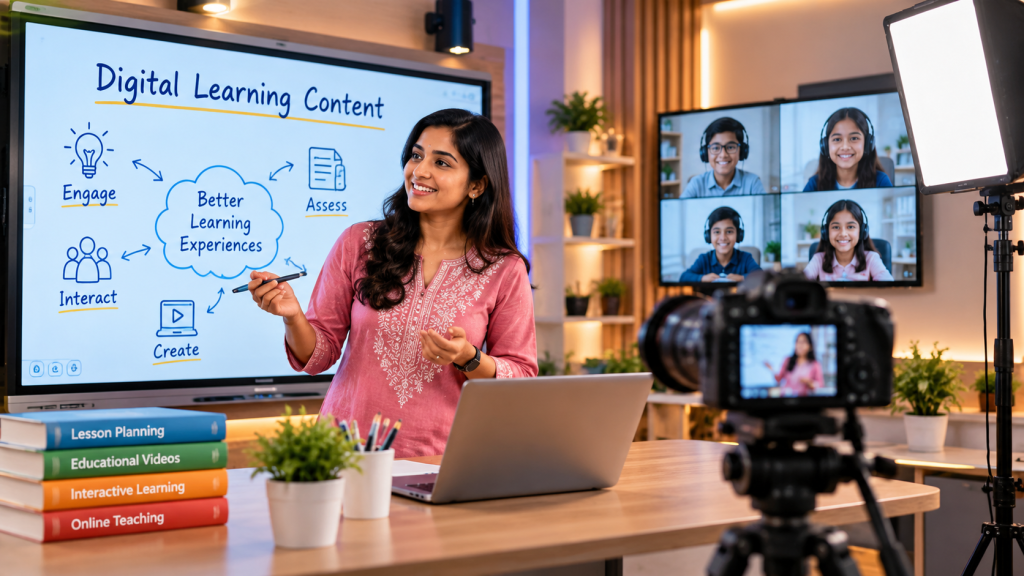
Education is no longer limited to what happens inside a traditional classroom. With the growth of online learning, digital platforms and technology-enabled teaching, educators now have more opportunities to share knowledge through different forms of digital content.
Digital learning content can include educational videos, presentations, recorded lectures, interactive materials, online assessments and other resources that support students beyond the classroom. When planned effectively, these resources can make lessons easier to understand and give learners more flexibility in how they access educational information.
However, creating digital content is not simply about recording a lesson or uploading information online. Effective educational content needs to be clear, well-structured and relevant to the learners. Teachers also need to consider how visuals, explanations, examples and technology can work together to support the learning process.
As educational institutions continue to adopt digital learning methods, teachers are becoming increasingly important in creating meaningful and engaging digital learning content. Understanding the basic principles of content creation can help educators make better use of technology while keeping teaching and learning at the centre.
What Is Digital Learning Content?
Digital learning content refers to educational material that is created, stored or delivered using digital technologies. It allows teachers to present lessons in formats that students can access through computers, tablets, smartphones and online learning platforms.
Unlike traditional printed materials, digital content can combine different forms of media to explain a topic. A single lesson can include written explanations, images, presentations, educational videos, animations, demonstrations, quizzes and other interactive resources.
Common examples of digital learning content include:
- Recorded lectures and educational videos
- Digital presentations and visual explanations
- Interactive learning materials
- Online quizzes and assessments
- Digital notes and study resources
- Demonstrations and practical tutorials
- Recorded classroom sessions
- Course materials for online learning platforms
The purpose of digital learning content is not simply to move traditional teaching materials onto a screen. Well-designed content should make information easier to understand, support different learning needs and give students useful resources that they can access when required.
For teachers, digital content also provides an opportunity to organize their knowledge into reusable learning resources. A well-prepared lesson can continue to support students beyond the classroom and become part of a broader digital learning experience.
Why Is Digital Learning Content Important?
The way students access information has changed significantly with the growth of digital technology. Learners can now use online platforms, recorded lessons and digital resources to study beyond the traditional classroom. This makes well-planned digital learning content an increasingly important part of modern education.
One of the main advantages is flexibility. Students can access digital resources at different times and revisit lessons when they need additional support. This can be particularly useful when a topic requires repeated explanation or revision.
Digital content can also make complex concepts easier to communicate. Teachers can combine explanations with diagrams, demonstrations, animations, images and educational videos to present information in different ways.
Another important benefit is consistency. Once a high-quality learning resource has been created, it can be used across different classes or learning sessions while maintaining the same core explanation and information.
Digital learning content can also help educational institutions expand their reach. Recorded lectures, online courses and digital resources can make educational material available to learners who may not always be able to attend a physical classroom.
Most importantly, digital content works best when it supports good teaching rather than replacing it. The teacher’s knowledge, explanation and understanding of learners remain central to creating meaningful educational experiences.
Key Elements of Effective Digital Learning Content
Creating digital learning content requires more than simply putting information into a digital format. Effective content should be planned around the needs of the learners and the learning objective of the lesson.
Some important elements include:
1. Clear learning objectives
Every piece of educational content should have a clear purpose. Students should understand what they are expected to learn or achieve by the end of the lesson.
2. Simple and structured explanations
Complex topics should be divided into smaller sections so that learners can follow the information more easily. A logical structure can also make digital resources easier to navigate.
3. Relevant visuals
Images, diagrams, presentations and demonstrations can help explain concepts that may be difficult to understand through text alone.
4. Engaging educational videos
Video can combine explanation, visuals and demonstrations in a single learning resource. Teachers can use recorded lessons, practical demonstrations and short concept videos depending on the subject.
5. Interactive activities
Quizzes, questions, exercises and assessments can encourage students to actively participate rather than simply consume information.
6. Appropriate length
Digital content should be long enough to explain the subject properly but structured so that learners do not become overwhelmed. Breaking larger lessons into smaller sections can make them easier to follow.
7. Accessibility and easy access
Content should be designed so that students can access it conveniently through the devices and platforms available to them.
When these elements are considered together, digital learning content can become a useful extension of classroom teaching and provide students with a more flexible learning experience.
How Teachers Can Create Better Digital Learning Content
Teachers do not need to become professional content creators to develop useful digital learning resources. The most important step is to start with the lesson objective and then choose the format that best supports the topic.
Start with the learning objective
Before creating any content, teachers should identify what students need to understand, practice or achieve. This helps keep the lesson focused and prevents unnecessary information from being included.
Know the target learners
Content should match the students’ age, knowledge level, learning needs and familiarity with technology. The same topic may require different explanations and formats for different groups of learners.
Create a simple content plan
A basic outline can help organize the introduction, main concepts, examples, activities and conclusion before production begins. This makes the final content more structured and easier to follow.
Use visuals where they add value
Diagrams, images, screen demonstrations and presentations can make certain concepts easier to understand. Visual elements should support the explanation rather than distract from it.
Keep explanations natural
When recording educational videos or online lessons, teachers should focus on explaining concepts clearly rather than trying to make the content overly complicated. A natural teaching style can make digital lessons easier for students to follow.
Review the content before publishing
Teachers should check the accuracy of information, audio quality, visuals, presentation and overall structure before sharing the resource with students.
Improve content based on learner feedback
Student questions, feedback and performance can help teachers identify which parts of a digital lesson are effective and which areas may need improvement.
By following a structured approach, teachers can gradually build a collection of useful digital learning resources that support both classroom and online teaching.
Different Types of Digital Learning Content
Teachers can use different formats depending on the subject, learning objective and needs of their students. Choosing the right format can make educational information easier to understand and more useful.
Recorded lessons
Recorded lessons allow teachers to explain complete topics that students can watch when it is convenient for them. Students can also revisit the lesson during revision.
Short educational videos
Short videos can focus on a specific concept, question or demonstration. They can be useful when students need a quick explanation without going through an entire lesson.
Digital presentations
Presentations can organize important points, images, diagrams and examples into a structured learning resource. Teachers can also use them during live online classes.
Interactive learning materials
Quizzes, exercises, simulations and interactive activities can encourage students to participate actively and check their understanding.
Digital study resources
Notes, reference materials, worksheets and downloadable resources can provide additional support after a lesson.
Practical demonstrations
Subjects that involve experiments, procedures or practical skills can benefit from recorded demonstrations. Students can revisit the steps when they need additional practice.
Using a combination of these formats can help institutions build a more diverse digital learning environment. The most effective approach depends on the subject and the learning outcome rather than simply using technology for its own sake.
The Role of Teachers in Digital Content Creation
Technology can provide the tools for digital learning, but teachers remain at the centre of the educational experience. Their subject knowledge, teaching approach and understanding of students are what give digital content its educational value.
Teachers can contribute to digital content creation in several ways:
- Subject expertise: Teachers bring accurate knowledge and real-world examples to the content.
- Lesson planning: They can organize topics into logical sections that are easier for students to understand.
- Content presentation: Teachers can use explanations, demonstrations, visuals and examples to communicate ideas effectively.
- Student engagement: Questions, activities and practical examples can encourage learners to participate.
- Content improvement: Student feedback can help teachers identify areas that need clarification or additional explanation.
Teachers also do not necessarily need advanced technical skills to begin creating digital content. Basic training in cameras, microphones, presentation tools, recording software and online platforms can help educators become more comfortable with technology.
E-Studyroom’s teacher-training programs specifically focus on helping trainers, teachers and coaching experts create educational content videos and conduct online classes, while also providing technical training for teaching and non-teaching staff.
When teachers are supported with appropriate training and technology, they can become confident digital content creators while continuing to focus on what matters most—the learning experience.
The Role of Technology in Digital Learning Content
Technology provides educators with a wide range of tools for creating, managing and delivering digital learning content. The right combination of technology can help teachers present lessons more clearly while making educational resources easier for students to access.
Some commonly used technologies include:
- Cameras and microphones for recording clear educational videos and lectures
- Interactive displays for presentations, demonstrations and visual explanations
- Lighting systems for improving the quality of recorded content
- Presentation and recording software for creating and editing lessons
- Learning management systems for organizing and delivering digital resources
- Online meeting platforms for live virtual classes and discussions
- Digital assessment tools for quizzes, assignments and learner feedback
However, technology should support the teaching objective rather than become the main focus of a lesson. A classroom does not become more effective simply because it contains more equipment. The technology needs to be reliable, easy for teachers to use and appropriate for the type of content being created.
Educational institutions should therefore consider factors such as ease of operation, content quality, connectivity, technical support and future requirements when choosing technology for digital learning.
A well-planned digital learning environment allows teachers to focus on teaching while technology supports content creation, communication and delivery.
How Digital Learning Content Supports Students
Well-designed digital learning content can support students in several ways, particularly when it is used alongside effective teaching.
Flexible access
Students can access recorded lessons, notes and other resources at times that suit their learning schedule.
Self-paced learning
Digital resources allow learners to review difficult topics, pause explanations and revisit lessons when necessary.
Better visual understanding
Videos, diagrams, demonstrations and animations can provide additional ways to explain concepts that may be difficult to understand through text alone.
Learning beyond the classroom
Digital content can extend learning outside regular classroom hours and give students additional resources for revision and practice.
Consistent learning resources
Carefully prepared digital materials can provide students with a consistent reference that they can return to throughout a course.
Support for different learning needs
Providing information through multiple formats can give students different ways to engage with a topic and find the approach that works best for them.
These benefits are most effective when digital content is thoughtfully designed and connected to clear learning objectives. Technology should complement the teacher’s role and provide students with additional opportunities to understand, practice and apply what they learn.
Common Mistakes to Avoid When Creating Digital Content
Creating digital learning content can be valuable, but there are some common mistakes that can reduce its effectiveness. Avoiding these issues can help teachers create resources that are clearer and more useful for learners.
Trying to include too much information
Digital lessons can become difficult to follow when too many concepts are presented at once. Breaking larger topics into smaller sections can make the content easier to understand.
Focusing more on technology than teaching
Advanced equipment and software do not automatically create better learning experiences. Technology should always support the educational objective.
Poor audio or visual quality
Students may find it difficult to concentrate when recordings have unclear audio, distracting backgrounds or poor visibility. Basic attention to recording quality can make a significant difference.
Lack of structure
Digital content should have a clear beginning, main explanation and conclusion. Students should be able to understand how different parts of the lesson connect.
Ignoring the learner’s perspective
Content should be created according to what students need to understand, rather than simply what the teacher wants to present.
Not reviewing content before publishing
Errors in information, audio, visuals or presentation can affect the learning experience. Reviewing the material before sharing it can help identify problems.
Avoiding these mistakes can help teachers create digital learning resources that are focused, accessible and easier for students to use.
The Future of Digital Learning Content
Digital learning content is likely to become an increasingly important part of modern education as institutions continue to adopt technology-enabled teaching methods. The focus is gradually moving from simply making information available online to creating learning experiences that are more engaging, flexible and connected.
Emerging technologies such as artificial intelligence, interactive learning platforms, virtual environments and data-driven learning tools may provide educators with new ways to create and deliver educational content. These technologies can support personalized learning, interactive experiences and more efficient content management.
At the same time, the fundamentals of good teaching will remain important. Clear explanations, relevant examples, thoughtful lesson planning and an understanding of student needs will continue to determine the value of educational content.
Educational institutions may also increasingly build dedicated environments for creating digital resources. Professional studios, recording facilities and integrated online teaching systems can help educators produce consistent, high-quality content for different courses and learning programs.
The future of digital learning content will therefore depend on a combination of good teaching, effective content design, appropriate technology and continuous improvement. Institutions that approach digital education with these principles can create learning resources that remain useful as technology and learner expectations continue to evolve.
Conclusion
Digital learning content has become an important part of modern education, giving teachers new ways to explain concepts and giving students greater flexibility in how they learn.
From recorded lessons and educational videos to interactive resources and digital assessments, different forms of content can support learning when they are designed around clear educational objectives.
The most effective digital learning content combines the knowledge of teachers with appropriate technology and thoughtful content planning. As educational institutions continue to explore digital learning, supporting teachers with the right training, tools and infrastructure will remain important.
By focusing on clear communication, learner needs and meaningful use of technology, educators can create digital resources that complement classroom teaching and provide students with valuable learning opportunities beyond the traditional classroom.
About E-Studyroom
E-Studyroom is an EduTech media solutions company providing EduTech studio setup, media solutions, online classroom infrastructure, system integration and studio training for educational institutions and organizations.
With experience in developing technology-enabled learning environments, E-Study room helps educators and institutions adopt professional solutions for digital content creation, online teaching and modern learning.