

Education is changing as digital technology becomes a more important part of teaching and learning. Online classes, digital resources and interactive learning platforms have created new ways for educators to share knowledge with students. Among these developments, video-based learning has become an increasingly useful way to explain concepts, deliver lessons and support learning beyond the traditional classroom.
Educational videos can help students learn through a combination of visual explanations, demonstrations, presentations and recorded lessons. They also give learners the flexibility to revisit important topics at their own pace, making video content a useful resource alongside classroom teaching.
For educational institutions, video-based learning also creates opportunities to build structured digital content that can be used across different courses, classes and learning environments. With the right technology and content creation approach, educators can turn their knowledge into engaging digital learning resources.
As institutions continue to explore new approaches to digital education, understanding how video-based learning can support modern teaching has become increasingly important.
What Is Video-Based Learning?
Video-based learning is an approach to education where video content is used as a primary or supporting resource for teaching and learning. Instead of relying only on textbooks, classroom lectures or written materials, students can learn through recorded lessons, demonstrations, animations, presentations and other visual explanations.
Educational videos can be created in different formats depending on the subject and learning objectives. A teacher may record a complete lecture, explain a difficult concept using visual graphics, demonstrate a practical activity or create a short video focusing on a specific topic.
One of the key advantages of video-based learning is that students can revisit the content when needed. A recorded lesson can be paused, replayed and reviewed multiple times, allowing learners to spend more time on topics they find difficult.
For educators, video also provides an opportunity to present information in a structured and engaging way. When combined with appropriate visuals, clear explanations and good-quality audio, educational videos can become useful resources alongside traditional classroom teaching.
Video-based learning does not necessarily replace face-to-face education. Instead, it can complement classroom instruction by giving teachers another way to explain concepts and giving students additional resources for learning and revision.
Why Is Video-Based Learning Becoming Important?
The growing use of digital education has changed how students access learning materials. Educational institutions are increasingly using online platforms, recorded lessons and digital resources alongside traditional classroom teaching. This has made video an important format for delivering and supporting educational content.
One reason video-based learning is useful is its flexibility. Students can access recorded lessons at a convenient time and revisit explanations when they need additional support. This can be particularly helpful when a topic requires repeated practice or detailed explanation.
Video can also make complex subjects easier to demonstrate. Concepts that are difficult to explain through text alone can sometimes be supported with diagrams, animations, demonstrations, experiments or step-by-step visual explanations.
For educators and institutions, recorded video content can also become a reusable learning resource. A well-produced lesson can support multiple groups of learners over time, while teachers can continue to use classroom interaction, discussions and practical activities alongside the digital material.
The growth of video-based learning does not mean that every lesson needs to become a video. The value comes from using video where it genuinely supports the learning objective and complements other teaching methods.
How Educational Videos Support Better Learning
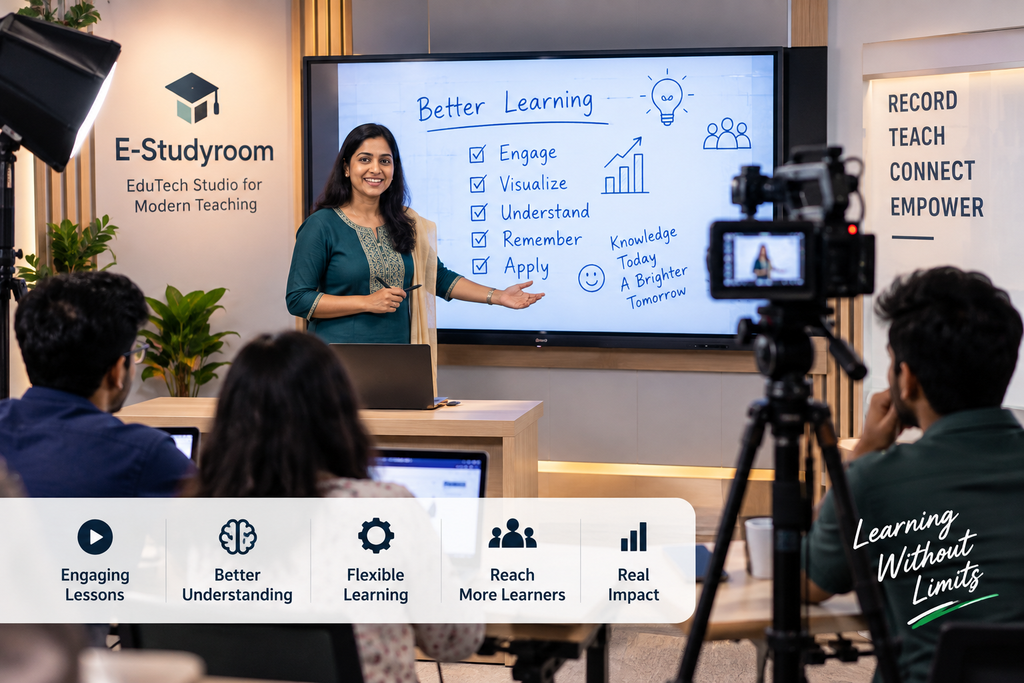
Educational videos can support learning by combining explanation, visuals and demonstrations in a format that students can revisit when needed. When the content is designed around a clear learning objective, video can become a useful supplement to classroom instruction.
Visual Explanation
Videos can use diagrams, animations, demonstrations and screen presentations to explain ideas that may be difficult to communicate through text alone.
Learning at Individual Pace
Recorded lessons allow students to pause, replay and review sections of a lesson according to their own learning needs.
Demonstrations and Practical Learning
Subjects involving experiments, procedures or practical activities can benefit from video demonstrations that allow students to observe a process step by step.
Revision and Reinforcement
Recorded lessons can be revisited before examinations or when students need additional clarification about a particular topic.
Consistent Learning Resources
Institutions can create a collection of well-structured educational videos that can support different batches of students over time.
Learning Beyond the Classroom
Video content can make educational resources accessible outside regular classroom hours, giving students additional opportunities to learn and revise.
Different Ways Institutions Can Use Educational Videos
Educational videos can be used in many different ways depending on the needs of an institution, subject and group of learners. They are not limited to recorded classroom lectures and can support different stages of the learning process.
Recorded Lectures
Teachers can record complete lessons and make them available to students for revision, additional study or learning outside regular classroom hours.
Concept Explanation Videos
Short videos can focus on specific concepts that students may find difficult. Teachers can use diagrams, animations, examples and demonstrations to explain these topics more clearly.
Practical Demonstrations
Subjects that involve experiments, procedures or practical activities can benefit from videos that demonstrate each step of a process.
Orientation and Training Videos
Institutions can create videos to introduce students to courses, explain procedures or provide training for academic and non-academic activities.
Online Course Content
Educational videos can become part of structured online courses, allowing institutions to combine recorded lessons with assessments, digital resources and other learning activities.
Revision and Supplementary Content
Short educational videos can provide additional explanations and revision support when students need to revisit a particular topic.
E-Studyroom’s portfolio shows practical examples of studios developed for producing web-based and video-based courses, including setups designed for lecture recording and graphics-enabled educational content.
Benefits of Video-Based Learning
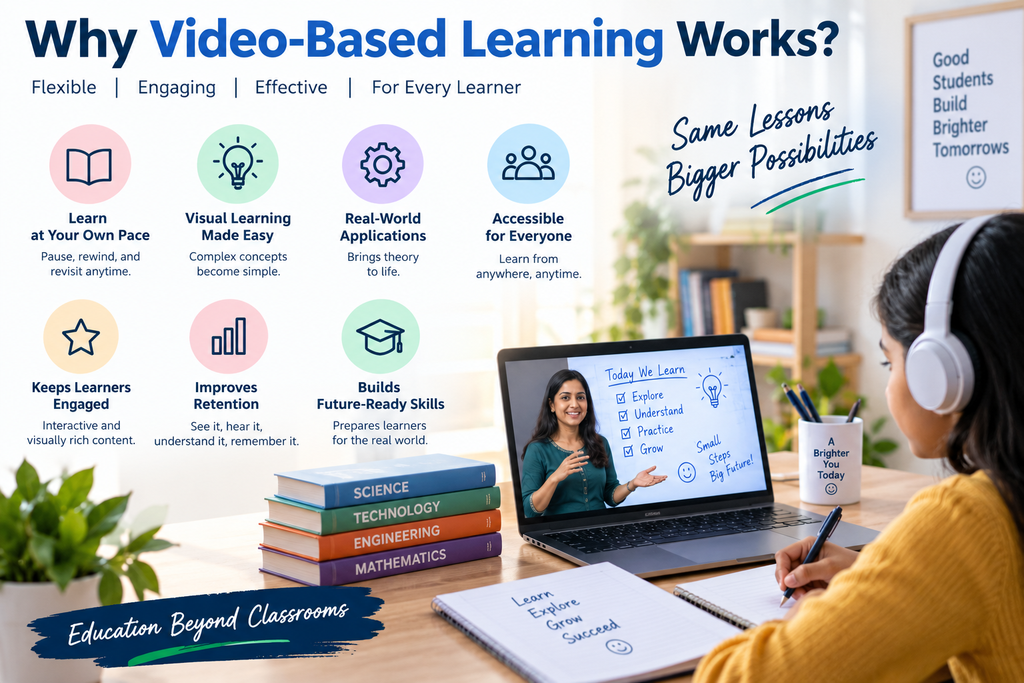
Video-based learning can provide several benefits when it is planned around clear educational objectives. It can support classroom teaching, online learning and independent study while giving educators another way to communicate information.
Flexible Learning
Students can access recorded lessons at different times and revisit content when they need additional explanation or revision.
Better Visual Understanding
Videos can combine narration, demonstrations, graphics and other visual elements to explain concepts in ways that may be difficult through text alone.
Support for Different Learning Needs
Students can pause, replay and review lessons according to their individual learning requirements.
Reusable Educational Content
Institutions can build libraries of recorded lessons and educational resources that can support students across different classes and academic years.
Extended Reach
Digital video content allows educators to share their knowledge with learners beyond the physical classroom and support online learning initiatives.
Improved Learning Continuity
Recorded educational content can provide students with additional learning resources when they are unable to attend a particular classroom session.
Support for Teachers
Well-designed video resources can complement classroom teaching, allowing teachers to spend more time on discussions, activities and student interaction.
The Role of Teachers in Video-Based Learning
Teachers remain at the centre of video-based learning. Technology can provide the tools for creating and delivering educational content, but the quality of the learning experience depends heavily on how educators plan, explain and present their lessons.
Teachers can use videos to introduce new concepts, demonstrate practical activities, explain difficult topics and provide additional resources for revision. They can also combine recorded videos with classroom discussions, assignments and interactive activities.
Creating effective educational videos does not mean that teachers need to become professional filmmakers. However, understanding basic aspects such as clear presentation, audio quality, visual organisation and lesson structure can help improve the usefulness of the content.
Training can therefore play an important role. When educators receive practical guidance on using recording equipment, presentation tools and online teaching platforms, they can become more confident in creating and delivering digital learning content.
The goal should be to use technology as a teaching aid rather than allowing the technology itself to become the focus. A well-planned video should make the subject easier to understand and support the learning objective.
Creating Effective Educational Video Content
Creating an educational video requires more than simply recording a teacher speaking to a camera. The content should be planned around the learning objective and presented in a way that keeps the subject clear and understandable.
Start With a Clear Objective
Before recording, educators should identify what students should understand or learn by the end of the video. A focused objective helps keep the lesson structured.
Keep the Explanation Structured
A clear introduction, logical sequence and concise conclusion can make educational videos easier to follow. Longer topics can also be divided into shorter lessons where appropriate.
Use Visuals Effectively
Presentations, diagrams, demonstrations, animations and screen content can help explain concepts and maintain student attention. Visual elements should support the lesson rather than distract from it.
Pay Attention to Audio and Video Quality
Clear audio and stable, well-lit video can make educational content easier to watch and understand. A professional recording environment can help maintain consistent quality.
Make the Content Engaging
Teachers can use questions, examples, demonstrations and real-world situations to make lessons more interactive. The presentation style should match the subject and the learners’ needs.
Review Before Publishing
Recorded content should be reviewed for clarity, audio quality, visual errors and accuracy before it is shared with students.
The Role of EduTech Studios in Video-Based Learning
A professional EduTech studio can provide the infrastructure needed to turn teaching knowledge into high-quality digital learning content. Instead of relying on basic recording equipment, institutions can create a dedicated environment where teaching, recording and digital content production work together.
An EduTech studio can support educators in recording lectures, creating subject-focused videos, conducting live online classes and developing structured digital learning resources. Cameras, microphones, interactive displays, lighting and recording systems can be integrated according to the institution’s requirements.
A professional studio can also help maintain consistency in educational content. When lessons are recorded in a suitable environment with reliable audio and video equipment, institutions can build a more organised collection of learning resources over time.
For institutions producing courses at scale, the studio can become part of a wider digital learning workflow. Teachers can prepare lessons, record content, review the material and make it available through the institution’s learning platform or other digital channels.
E-Studyroom’s portfolio includes examples of EduTech studios developed for lecture recording, live online classes and the production of web-based and video-based courses.
Video-Based Learning and the Future of Education
Video-based learning is likely to remain an important part of digital education as institutions continue to explore new ways of delivering knowledge. Improvements in internet connectivity, digital platforms, content creation tools and classroom technology are making it easier for educators to create and share learning resources.
Future educational videos may also become more interactive and personalised. Technologies such as artificial intelligence, interactive learning platforms and immersive digital tools can provide educators with new ways to explain concepts and support different learning needs.
However, technology should continue to serve the learning objective rather than replace effective teaching practices. The value of video-based learning will depend on the quality of the content, the relevance of the teaching approach and how well digital resources are integrated with classroom learning.
Educational institutions that develop strong digital content capabilities can be better prepared to support changing learning requirements. Professional recording environments, teacher training and reliable digital infrastructure can help institutions build these capabilities over time.
As education continues to become more connected and flexible, video-based learning can complement traditional teaching and provide learners with additional ways to access, understand and revisit educational content.
Conclusion
Video-based learning has become a valuable part of modern education, giving educators new ways to explain concepts and giving students flexible access to learning resources.
From recorded lectures and practical demonstrations to online courses and revision content, educational videos can support different learning needs when they are planned around clear objectives.
The effectiveness of video-based learning ultimately depends on more than technology. Good content, effective teaching, appropriate production quality and proper integration with classroom learning all play an important role.
As educational institutions continue to develop their digital learning capabilities, video-based learning can complement traditional teaching and create additional opportunities for educators and students to connect, learn and share knowledge.
About E-Studyroom
E-Studyroom is an EduTech media solutions company providing EduTech studio setup, media solutions, online classroom infrastructure, system integration and studio training for educational institutions and organizations.
With experience in developing technology-enabled learning environments, E-Studyroom helps educators and institutions adopt professional solutions for digital content creation, online teaching and modern learning.